The Invisible Luxury of Water: What Every Newmarket Ontario Homeowner Should Know About What's Coming Out of Their Tap
The Invisible Staff Series · Blog 19 · Luxury Home Wellness
The Invisible Luxury of Water
What every Newmarket Ontario homeowner should know about what’s coming out of their tap
We spend thousands choosing the perfect kitchen faucet, designing beautiful bathrooms and selecting premium appliances. But how much do we actually know about the water running through them?
- Newmarket Ontario
- Stonehaven
- Aurora Estates
- York Region

Quick answer
What should Newmarket Ontario homeowners know about home water quality? York Region’s drinking-water systems received 100% compliance scores in all provincial inspections completed in 2025. Newmarket Ontario’s water is classified as hard (141 mg/L average in Q2 2026), which has no known negative health effects but can cause mineral buildup on fixtures and appliances. Filters differ in what they remove, so choose certified products for the specific concern. Homes on private wells are the owner’s responsibility and should be tested for bacteria at least three times a year. A licensed plumber or qualified water-treatment professional can assess your particular property.
Key takeaways
- York Region reported 100% compliance scores in all provincial drinking-water inspections completed in 2025. This is a regulatory result, not a test of every individual tap.
- Newmarket Ontario averaged 141 mg/L hardness in Q2 2026, which York Region classifies as hard (121–180 mg/L). Aurora averaged 130 mg/L. Hard water has no known negative health effects.
- Not every filter solves the same problem. Look for accredited third-party certification and confirm the specific contaminant-reduction claim.
- Health Canada’s maximum acceptable concentration for lead is 5 µg/L. Older plumbing materials can be a source, so ask for plumbing records when buying an established home.
- Private wells are the owner’s responsibility. Ontario recommends bacterial testing at least three times a year, and free testing doesn’t cover every chemical or mineral concern.
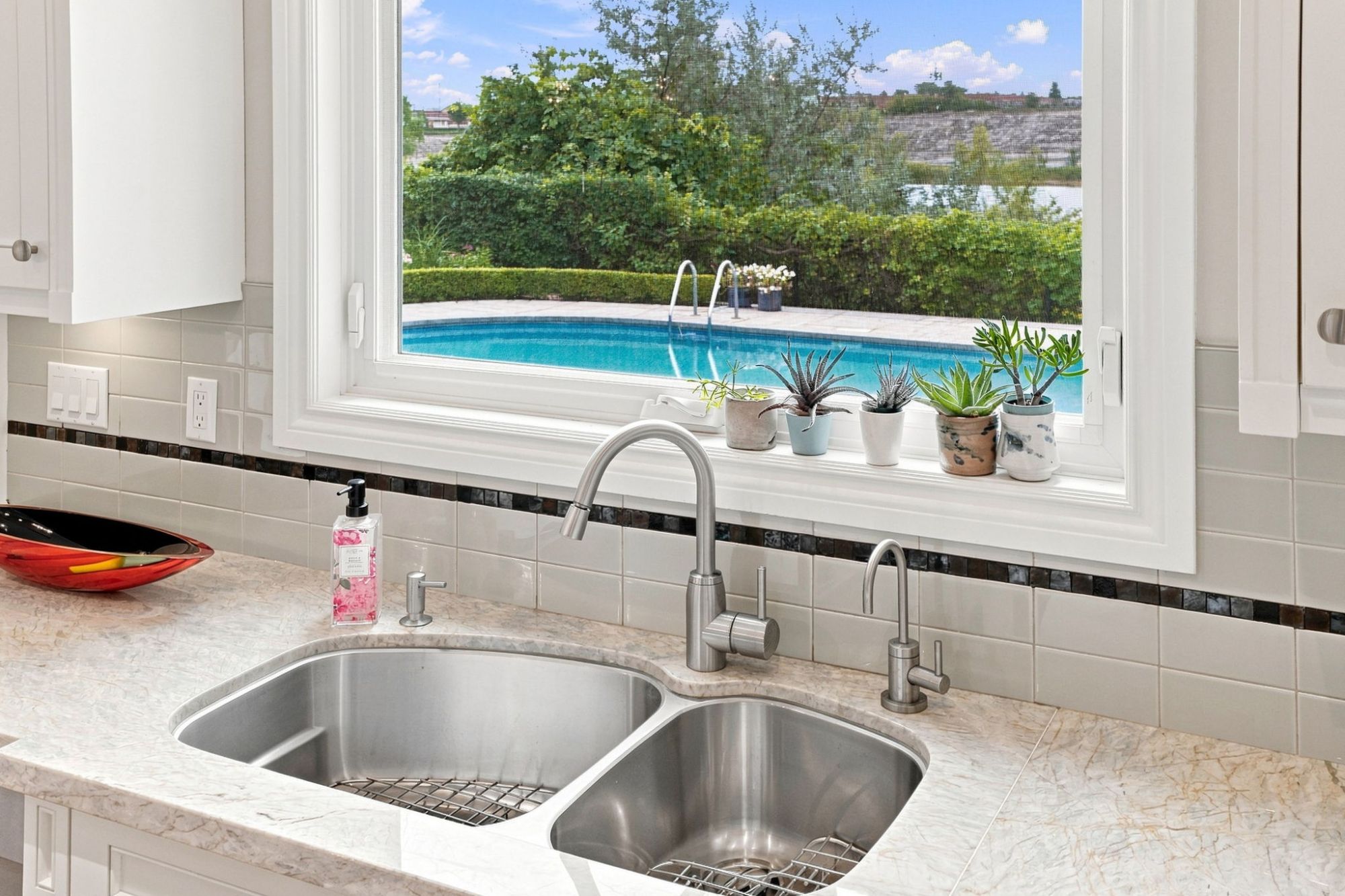
Have you ever walked into a beautifully designed kitchen and immediately noticed the faucet?
Maybe it’s a gorgeous brushed-gold fixture over a marble island. Or a beautifully designed sink surrounded by custom cabinetry. I love those details.
But here’s something interesting. We spend so much time choosing the perfect kitchen fixtures, designing spa-inspired bathrooms and investing in premium appliances. Yet how much do we really know about the water flowing through them?
Water is one of the hardest-working elements in any home. We drink it, cook with it, shower in it and rely on it to keep everything running. In larger homes throughout Stonehaven, Newmarket Ontario, Aurora Estates and York Region, understanding water quality and plumbing systems is another part of thoughtful luxury homeownership.
Not because there’s necessarily something wrong with our water. Quite the opposite. It’s about understanding what we have and making informed decisions about how we care for our homes.
A beautiful faucet is luxury you can see. Understanding the water behind it is luxury you can trust.
01 · The good news
The Good News About Water in York Region
Let’s begin with something encouraging. According to York Region’s May 2026 announcement, its drinking-water systems received 100% compliance scores in all provincial inspections completed during 2025 (York Region: 2025 water quality performance). The Region also reported that its drinking-water quality test results complied with Ontario’s Safe Drinking Water Act requirements.
That’s reassuring news for residents. To be clear, an inspection score is a regulatory compliance result. It isn’t a claim that every individual tap in every home has been tested. But it reflects the work of professionals many of us never see: the people responsible for testing, operating and maintaining the infrastructure that delivers water to our communities.
Here’s another interesting local detail. Municipal drinking water in Newmarket Ontario comes from a blend of Lake Ontario water and groundwater. York Region supplies the treated water, while the Town of Newmarket distributes it through its local system. It’s a sophisticated network, supported by monitoring, treatment and regular testing.
Some of the most important services supporting our homes begin long before water reaches the kitchen faucet.
02 · Hidden detail
The Hidden Detail: Newmarket Ontario Has Hard Water
Here’s something homeowners may have noticed without understanding why it happens. White mineral deposits around faucets. Buildup on shower glass. Scale inside kettles and other water-using appliances. These can be signs of hard water, which is largely associated with dissolved calcium and magnesium.
According to York Region’s published data, the average water hardness in Newmarket Ontario during the second quarter of 2026 was 141 milligrams per litre, measured as calcium carbonate (York Region: water quality and hardness). York Region classifies water between 121 and 180 mg/L as hard. Aurora’s reported average during that period was 130 mg/L.

Now, here’s the important distinction. Hard water is not the same thing as unsafe drinking water. York Region explains that water hardness has no known negative health effects. However, it can create mineral buildup, make cleaning more challenging and affect the performance or maintenance needs of certain appliances.
That’s particularly worth considering in luxury homes with multiple bathrooms, elaborate shower systems, high-end appliances and beautiful fixtures. Sometimes the solution is simply a better cleaning and maintenance routine. In other cases, homeowners may choose to investigate water-softening equipment. That decision should be based on the home’s actual conditions and needs.
03 · Filtration
Water Filtration: Do You Really Need an Expensive System?
There’s no shortage of water-filtration products available today. Under-sink filters. Refrigerator filters. Whole-home systems. Reverse-osmosis equipment. And plenty of marketing promising exceptionally pure water. But here’s what I would encourage homeowners to remember: not every filter solves the same problem.
Some systems focus on aesthetic concerns. NSF/ANSI Standard 42 addresses certain aesthetic effects.
Others are certified to reduce specific contaminants. NSF/ANSI Standard 53 covers specified health-related contaminants.
A system designed to address hardness isn’t necessarily designed to remove lead or bacteria. Ask a qualified water-treatment professional.

Before you buy · Filters
Health Canada recommends looking for accredited third-party certification and specific contaminant-reduction claims when selecting drinking-water filters (Health Canada: choosing drinking-water filters). If lead reduction is your concern, choose a product specifically certified for lead reduction. Even within a certification standard, confirm the exact claim.
The goal shouldn’t be to purchase the most expensive equipment. It should be to understand whether there’s a problem to solve and select equipment suited to that particular issue.
04 · Behind the walls
The Plumbing Behind the Beautiful Fixtures
This is one of the details I believe deserves more attention when purchasing an established home. Beautiful fixtures can be replaced relatively easily. But the plumbing hidden behind walls and beneath floors is another story. The age and materials of a property’s plumbing can influence maintenance requirements and, in some situations, water quality at the tap.
For example, Health Canada explains that lead can enter drinking water from certain older plumbing materials, including service lines, solder and fittings. Canada’s maximum acceptable concentration for lead in drinking water is 5 micrograms per litre, measured using an appropriate tap-water sampling protocol (Health Canada: lead in drinking water).
This doesn’t mean every older home contains lead plumbing, nor does it mean municipal water arriving at a property is unsafe. It means that understanding a building’s plumbing materials can be important.
- Are there records of major plumbing upgrades?
- Has the service line been replaced?
- Has the water been tested previously, and when?
A qualified plumber can help identify potential concerns and recommend whether testing is appropriate. The value is in having reliable information rather than making assumptions based on how beautifully a home has been renovated.
05 · Estate properties
Private Wells: A Different Responsibility for Estate Owners
Some estate properties throughout York Region are served by private wells rather than municipal water, and that creates a different set of responsibilities. Unlike regulated municipal systems, private wells are generally the responsibility of the property owner.
Well testing · Ontario guidance
According to the Government of Ontario, private well water should be tested for bacterial contamination at least three times per year, and more often when conditions warrant (Government of Ontario: well water testing). Public Health Ontario provides free bacterial testing for private drinking-water sources, checking for indicators such as E. coli and total coliform bacteria.
But here’s a detail many people may not realize. That free testing doesn’t measure every possible chemical or mineral contaminant. Additional testing may be necessary depending on the well, surrounding land use and specific concerns.
For someone considering a rural estate, understanding the water supply should be part of the property evaluation. Ask about well records, water quality results, treatment equipment and any known maintenance concerns.
A beautiful acreage property can offer an extraordinary lifestyle. It also comes with systems that deserve proper attention.
06 · The invisible staff
The Invisible Staff Behind Your Water
Throughout this series, I’ve been exploring the professionals who quietly help our homes function beautifully. Water brings another important group into the conversation.
- Municipal water operators
- Licensed plumber
- Water-treatment professional
- Accredited laboratory
Municipal water operators help protect the public water supply. Licensed plumbers maintain the systems within our properties. Qualified water-treatment professionals assess filtration and softening needs. And accredited laboratories provide testing when particular water-quality questions arise.
Each has a different role. A faucet developing mineral buildup doesn’t necessarily require the same solution as a plumbing leak, and a concern about drinking-water contaminants deserves a different investigation than a problem with shower pressure.
The right expertise helps avoid unnecessary expense and inappropriate equipment.
07 · Buying and selling
What Luxury Buyers and Sellers Should Know
When viewing a luxury property, it’s easy to focus on beautiful kitchens and bathrooms. Those spaces often make a lasting impression. But I would also encourage buyers to ask about the systems behind them.
Ask about
Whether the property is supplied by municipal water or a private well, whether any water-treatment equipment is installed, and who services it.
Review
Records of plumbing upgrades, maintenance records, previous water-quality results and well records where applicable.
Share
Accurate documentation about plumbing improvements and treatment equipment, so buyers understand the property’s features.
Avoid
Suggesting that water-treatment equipment guarantees a higher selling price.
Documentation doesn’t guarantee a higher price, but it can support a more informed and transparent transaction. A qualified home inspector and the appropriate specialists can help evaluate these systems. If you’re planning to sell, a home valuation for your Newmarket Ontario property is a good place to start.
08 · Newmarket Ontario & Aurora
What This Means for Living in Newmarket Ontario and Aurora
One of the things I appreciate about living in York Region is the quality of the communities and the infrastructure supporting them. But even with a strong municipal water system, understanding the systems within our individual properties remains important.
That might mean knowing how to maintain a water softener, replacing refrigerator filters according to the manufacturer’s instructions, checking for leaks, understanding a private well, or simply learning where the main water shutoff valve is located.
Four things every homeowner should know
- Know your water source: municipal supply or private well.
- Understand water hardness and how it affects fixtures, appliances and finishes.
- Select filters certified for the specific contaminant you want to reduce.
- Test private wells for bacteria at least three times a year.
None of these things is particularly glamorous. But they contribute to the comfort and care of a home. And sometimes, the most important luxury features are the ones nobody notices.
A beautiful faucet is luxury you can see. Understanding the water behind it is luxury you can trust.
Grace Simon
FAQ
Frequently Asked Questions About Home Water Quality in Newmarket Ontario
Is the water in Newmarket Ontario hard?
Yes. According to York Region’s published data, the average water hardness in Newmarket Ontario during the second quarter of 2026 was 141 mg/L as calcium carbonate. York Region classifies water between 121 and 180 mg/L as hard. Aurora’s reported average for the same period was 130 mg/L.
Is hard water unsafe to drink?
No. York Region explains that water hardness has no known negative health effects. It can, however, cause mineral buildup on fixtures, make cleaning more challenging and affect the maintenance needs of certain appliances.
Do I need a water filter or softener for my luxury home?
Not necessarily. Not every filter solves the same problem. Decide which concern you want to address, such as taste, a specific contaminant or hardness, then choose equipment accordingly. Health Canada recommends looking for accredited third-party certification and specific contaminant-reduction claims. A qualified water-treatment professional can advise on hardness.
How often should a private well be tested?
The Government of Ontario recommends testing private well water for bacterial contamination at least three times per year, and more often when conditions warrant. Public Health Ontario provides free bacterial testing for private drinking-water sources.
Does the free well-water test check for chemicals?
No. The free bacterial testing checks for indicators such as E. coli and total coliform bacteria. It doesn’t measure every chemical or mineral contaminant, so additional testing through an accredited laboratory may be appropriate depending on the well, surrounding land use and specific concerns.
References
Sources and Further Reading
- York Region: 2025 water quality performance (100% compliance scores in 2025 provincial inspections)
- York Region: water quality and hardness (Newmarket Ontario 141 mg/L and Aurora 130 mg/L, Q2 2026)
- Health Canada: lead in drinking water (maximum acceptable concentration of 5 µg/L)
- Government of Ontario: private well testing (bacterial testing at least three times a year)
- Health Canada: choosing drinking-water filters (third-party certification and contaminant-specific claims)
About Grace Simon
REALTOR® · New Doors Group · eXp Realty, Brokerage · eXp Luxury
Grace helps luxury buyers and sellers across Newmarket Ontario, Stonehaven, Aurora and York Region make confident, informed real estate decisions.
Newmarket Ontario · Aurora · York Region
Buying, Selling or Exploring Your Next Chapter?
If you’re considering buying, selling or exploring your next chapter in Newmarket Ontario, Aurora or York Region, I’d love to help you make thoughtful, informed decisions about your property.
Book a Private Market Update Conversation
Call 905-953-6926 · grace@gracesimon.ca
This article is general information, not professional advice. Consult a licensed plumber, qualified water-treatment professional or accredited laboratory for your specific property and needs. Statistics are regional or national, not measurements from individual properties.
Not intended to solicit parties already under representation.
Categories
- All Blogs (79)
- Community & Events (8)
- Community & Lifestyle (26)
- East Gwillimbury (1)
- Family Real Estate Planning (4)
- Featured Luxury Homes (1)
- Luxury Living (6)
- Luxury Real Estate (3)
- Market Update (6)
- Newmarket Community & Lifestyle (1)
- Newmarket Ontario (3)
- Newmarket Real Estate (29)
- Renovations (1)
Recent Posts